
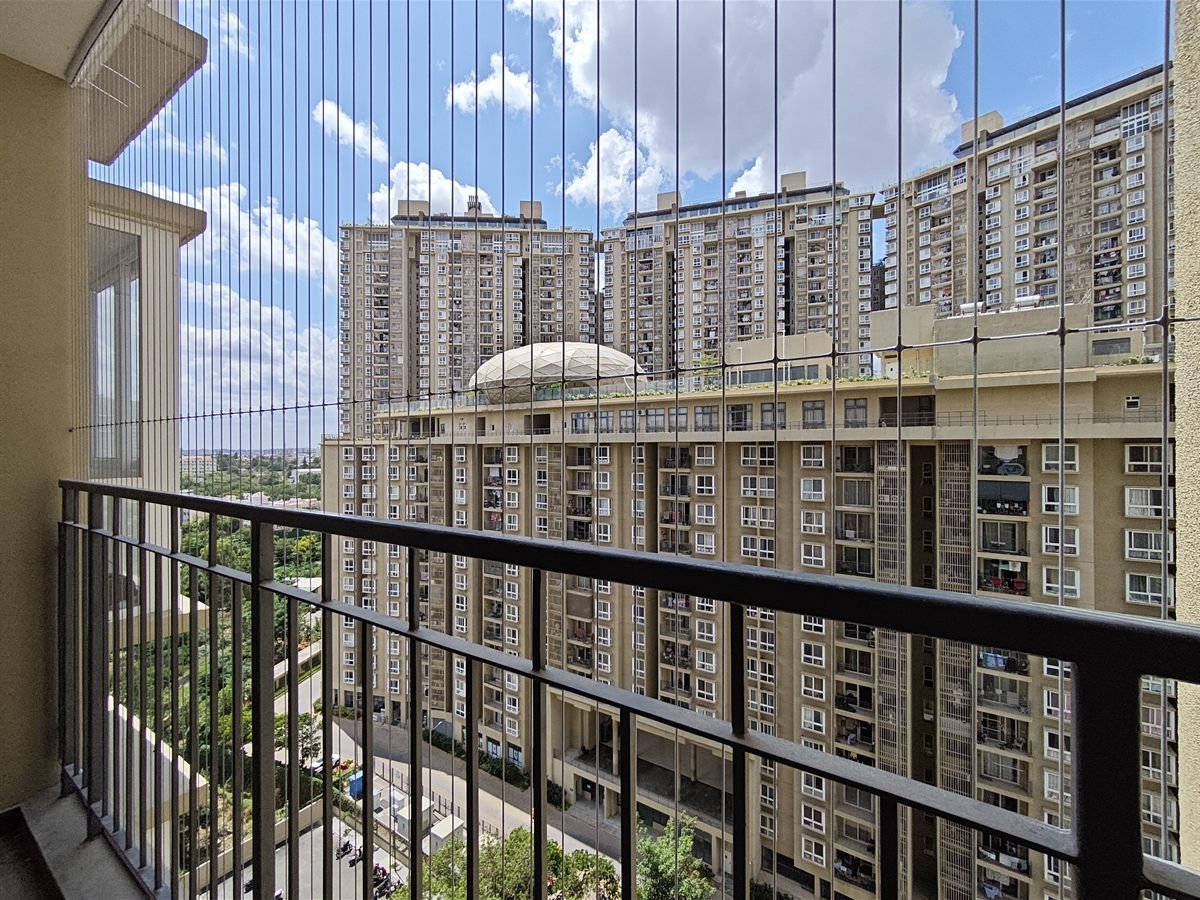
Invisible Grill — High-Rise Balcony
Invisible grill wires installed on a high-rise balcony, keeping the view open while adding fall safety.
A safety barrier for balconies, windows and open ledges that stays out of the way of your view — built with tensioned stainless steel wires instead of bulky metal bars.
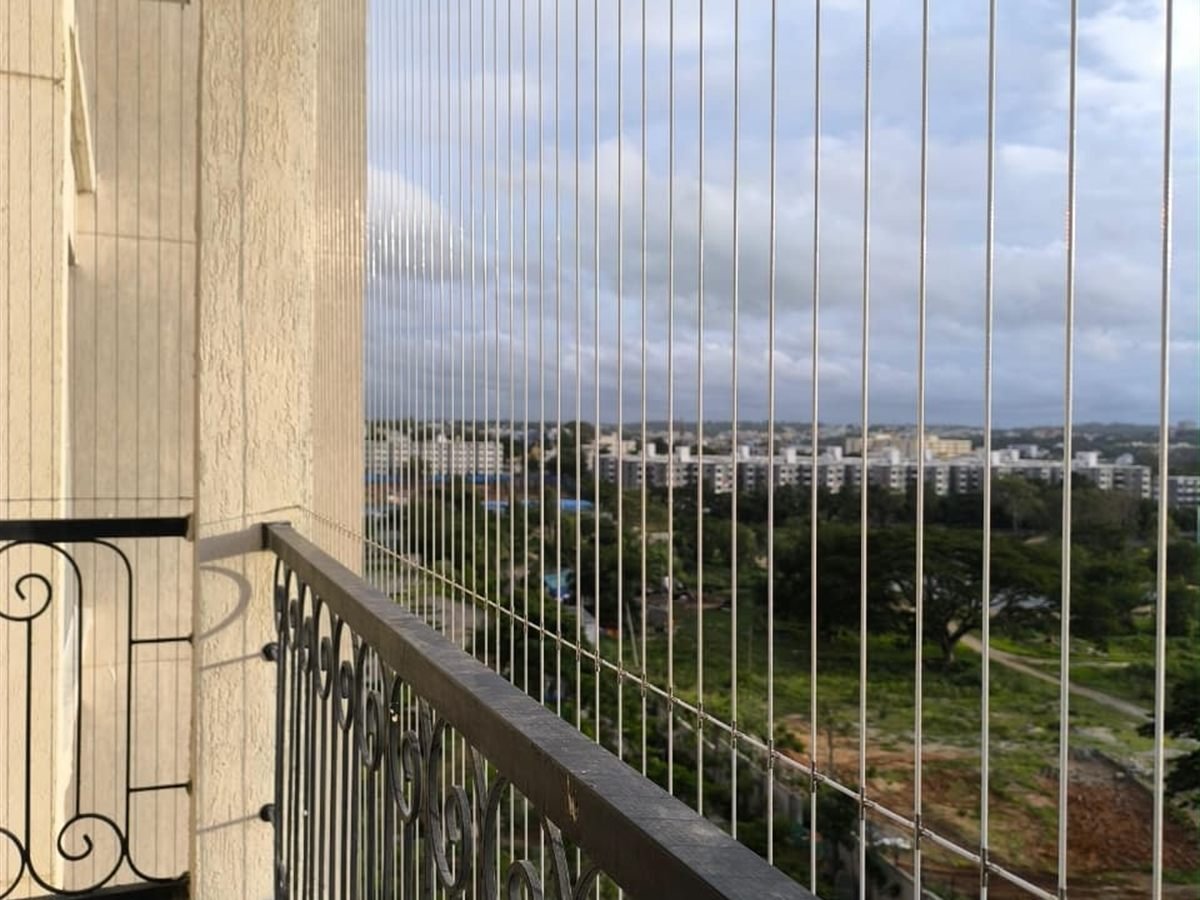
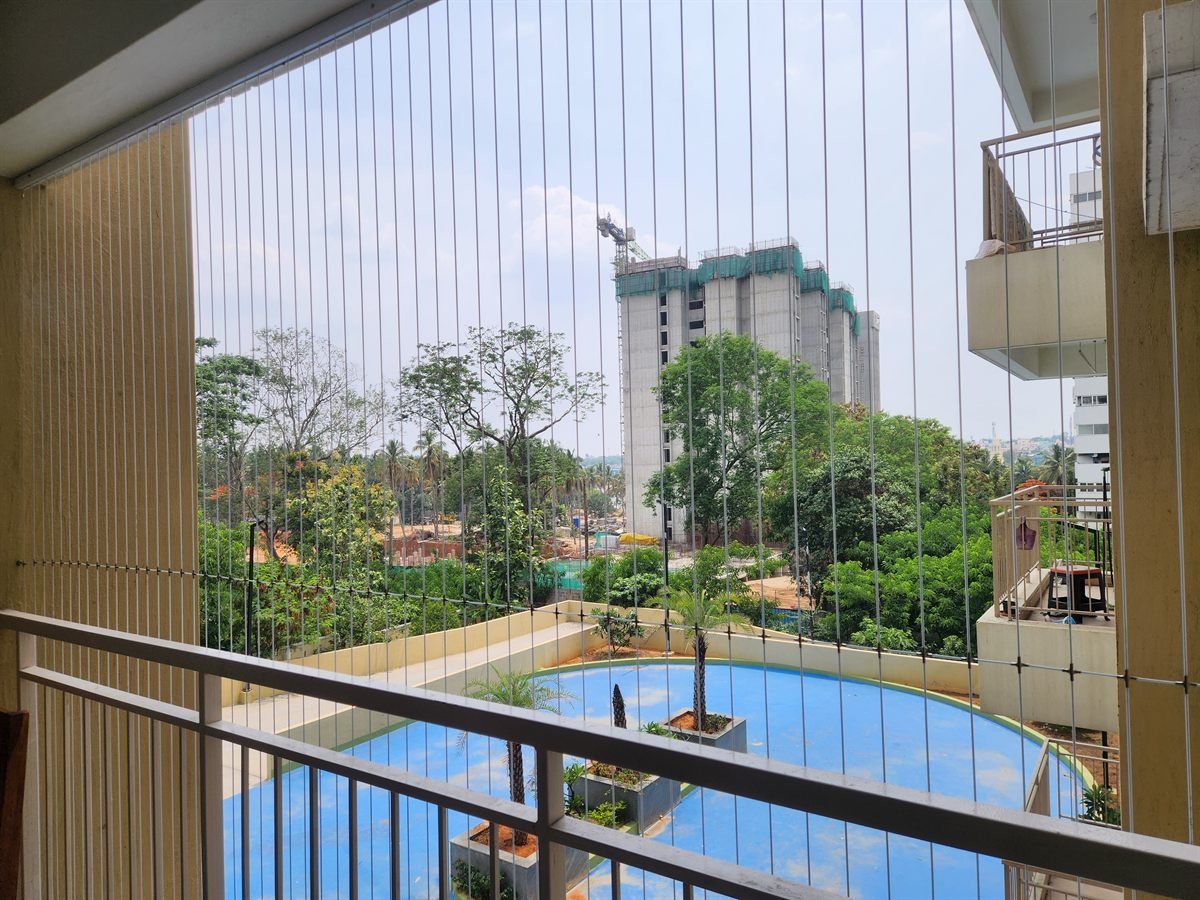
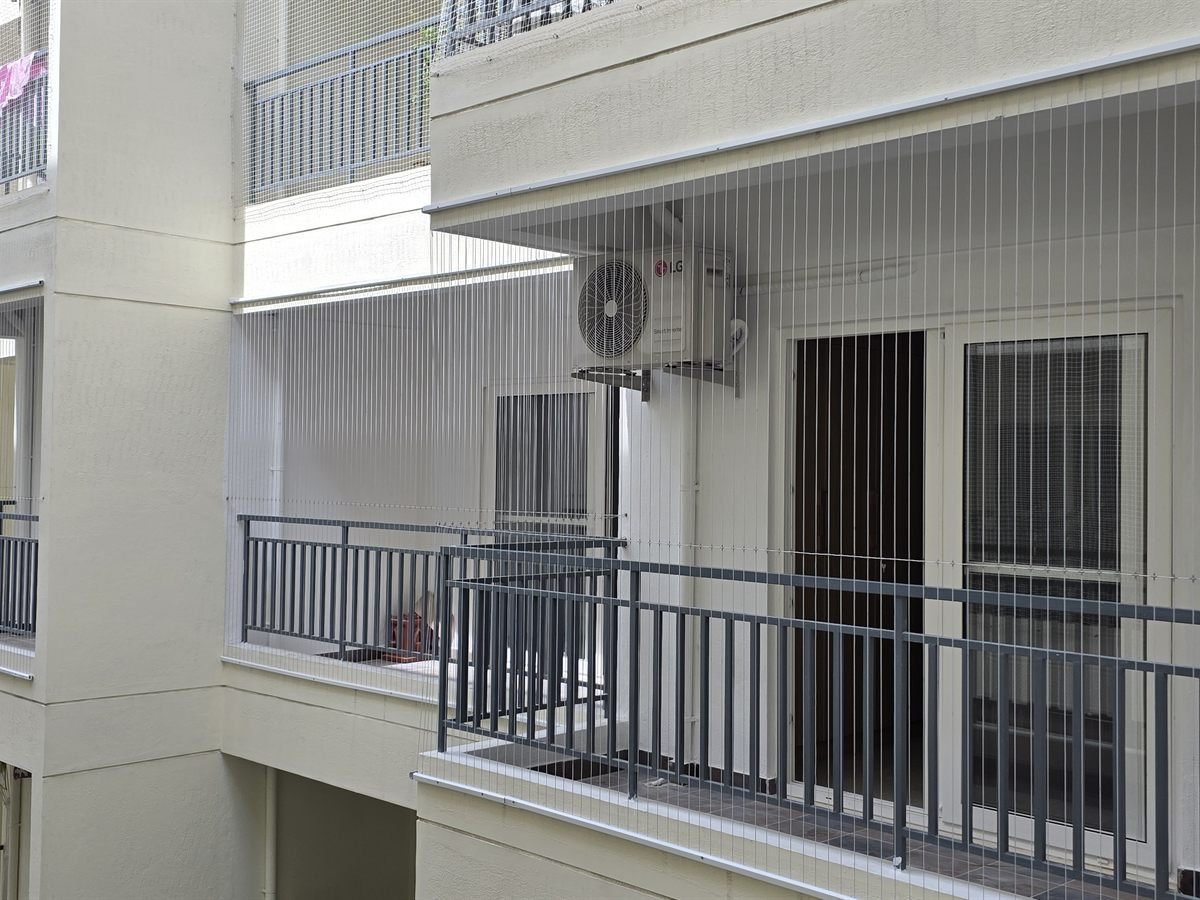
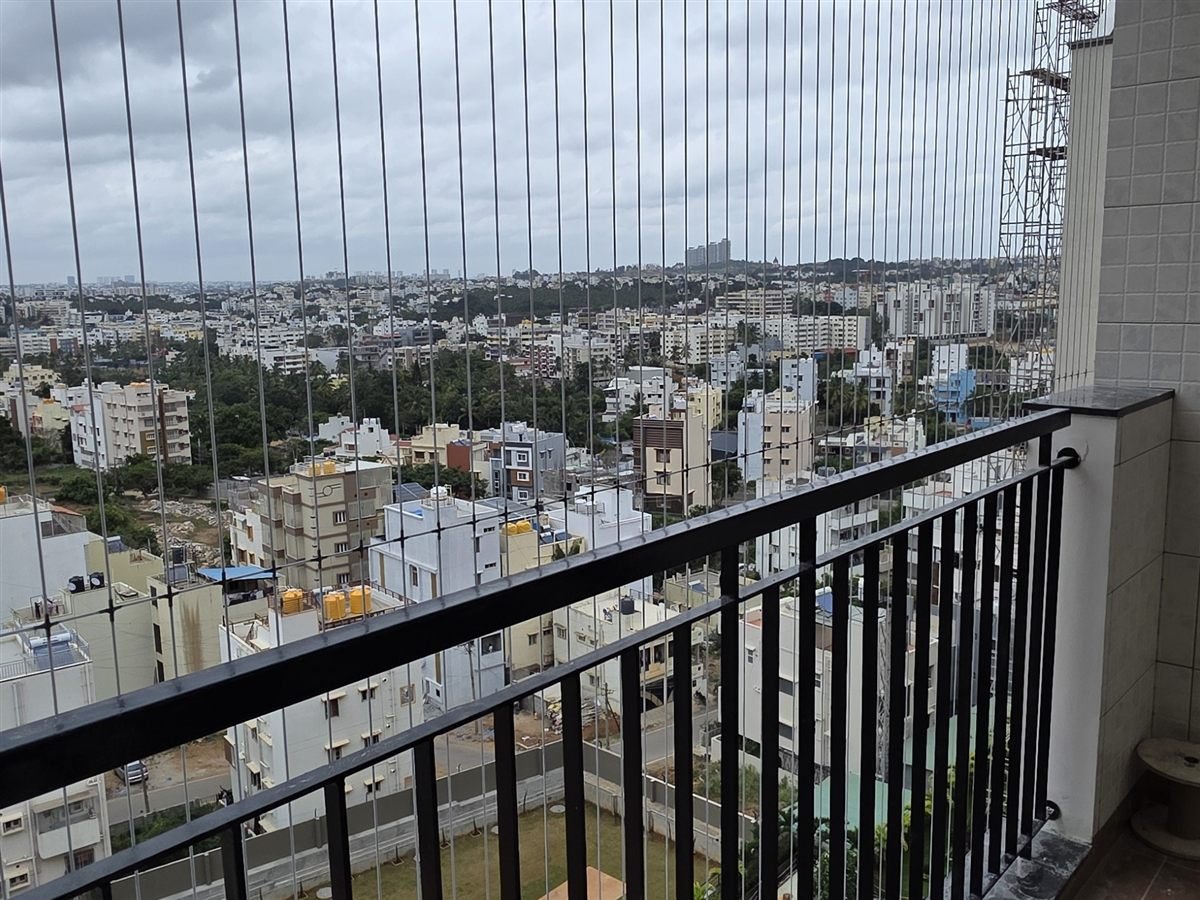
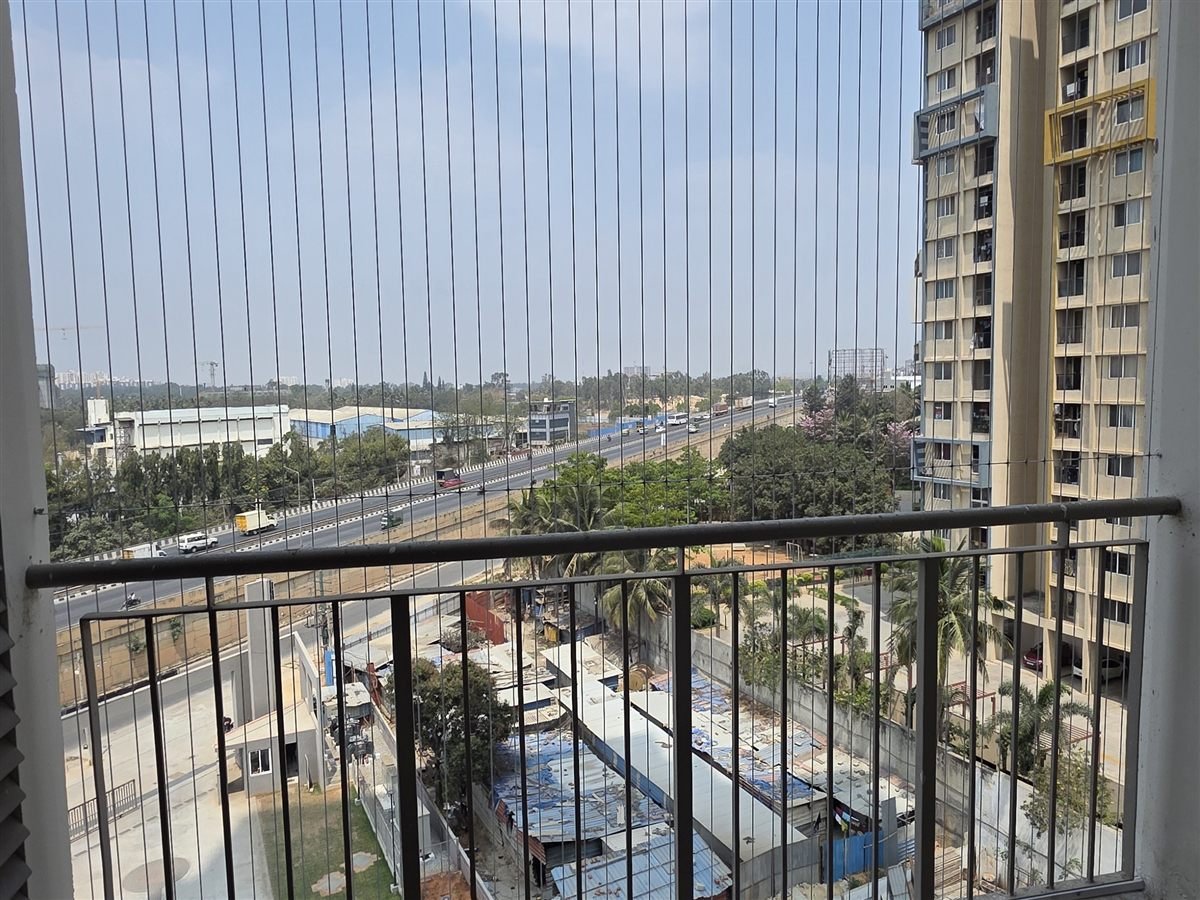
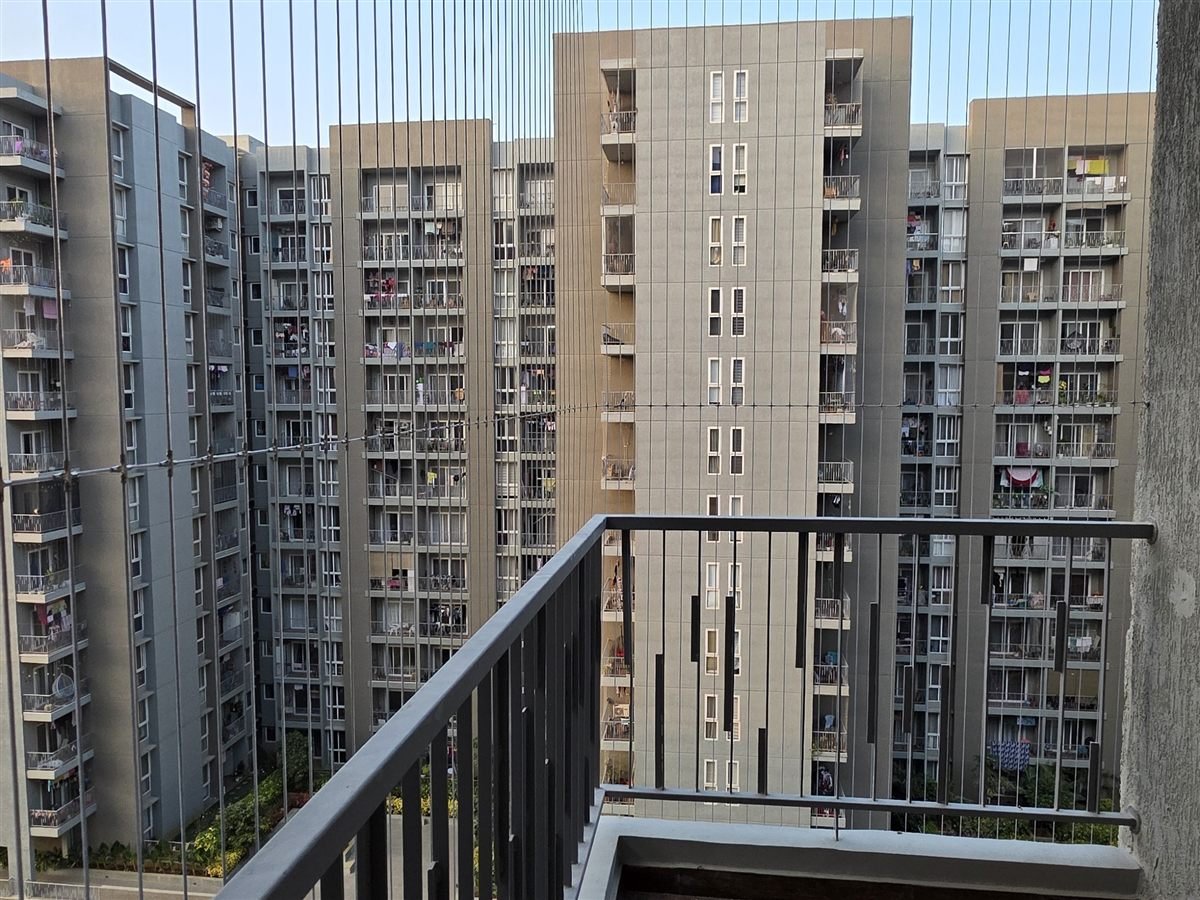
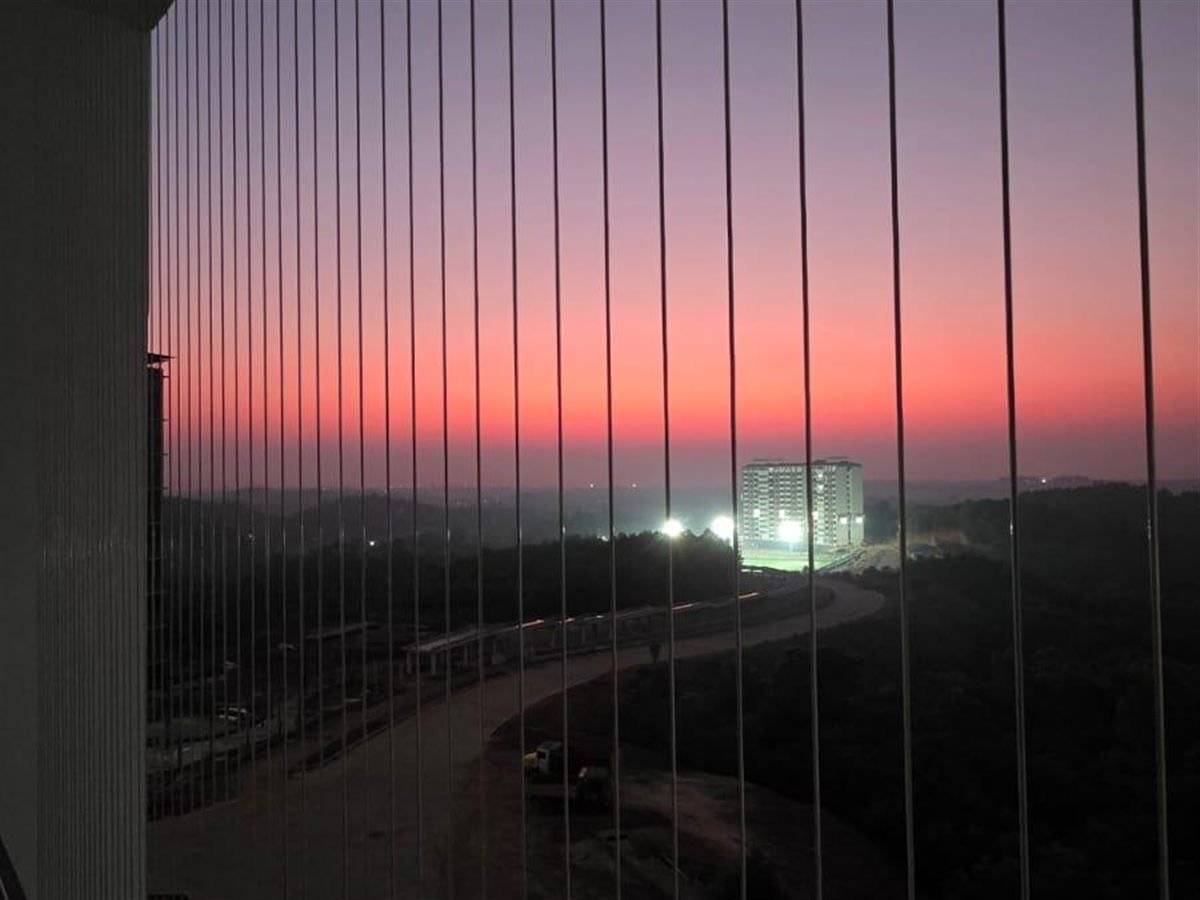
Invisible grills are a modern alternative to traditional MS (mild steel) window and balcony grills. Instead of thick welded bars, they use thin, closely-spaced stainless steel wires held under tension within a slim frame. The result is a barrier that does the same job — preventing falls through open balconies, windows and ledges — without the heavy, caged look of conventional grills.
The most common application — an open barrier across the balcony edge that keeps the space feeling open while preventing falls, especially important in homes with children, elderly residents or pets.
Full-height and sit-out windows can be fitted with invisible grills so the window can stay open for ventilation without compromising safety.
Open staircases, duplex landings and other open ledges within a home can also be fitted where a conventional railing would feel heavy or obstruct the design.
The default balcony or window barrier in most Indian homes is a welded mild steel (MS) grill — strong, familiar, and typically the cheaper option per opening. The trade-off is that MS grills are visually heavy, need periodic painting or rust treatment, and are increasingly restricted by RWAs and builder associations that want a uniform building facade. Invisible grills solve the same fall-safety problem with tensioned stainless steel wires instead of bars, keeping the opening open to view and light — the wire, tensioning and precision fixing involved is why they usually cost more than an equivalent MS grill. The right choice generally comes down to whether keeping the view open is worth that difference for your specific space.
Invisible grills are engineered as a fall-prevention barrier, not a decorative addition — the wire gauge, spacing and tensioning are chosen for the opening they're covering, and every installation is checked for tension and secure fixing before handover. The trade-off for the slim, unobtrusive look is careful installation: poorly tensioned wires or weak anchoring undermine the whole point, which is why we treat the site assessment and fixing method as seriously as the visible finish.
We visit the property to measure the openings and assess the mounting surface, frame type and any structural considerations.
Based on the assessment, we propose a wire layout for each opening and share a clear quotation before any work begins.
The frame is fixed and wires are tensioned across each opening by trained installers, with care taken to protect existing tiles, frames and paintwork.
Once installed, each section is checked for tension and finish before handover, along with guidance on care.
Invisible grills need very little upkeep — an occasional wipe-down to clear dust is usually enough, and there's no painting or rust-proofing to keep up with the way there is with a welded MS grill. The one thing worth checking periodically, especially after a heavy storm, is that the wire tension hasn't slackened; a loose wire is easy to spot and straightforward to re-tension without redoing the whole installation. Avoid leaning heavy objects directly against the wire span or scrubbing it with abrasive cleaners, which can wear the coating over time.
It's worth being clear about what invisible grills are and aren't. They're a fall-prevention barrier, not a full enclosure — unlike a glazed balcony, they don't keep out rain, dust or insects, and they won't stop small pets from slipping between wide-set wires if the spacing isn't suited to that. They're also not designed to take heavy structural load, so they shouldn't be used as a support to lean or hang weight from. And because they're a safety barrier rather than a security product, they're not a substitute for a locked door or window where forced-entry resistance is specifically needed. We'll talk through whether invisible grills are actually the right fit for your situation during the site visit, rather than assume they are.
Every quote starts with an on-site assessment; these are the factors that typically shape it.
Invisible grill wires installed on a high-rise balcony, keeping the view open while adding fall safety.
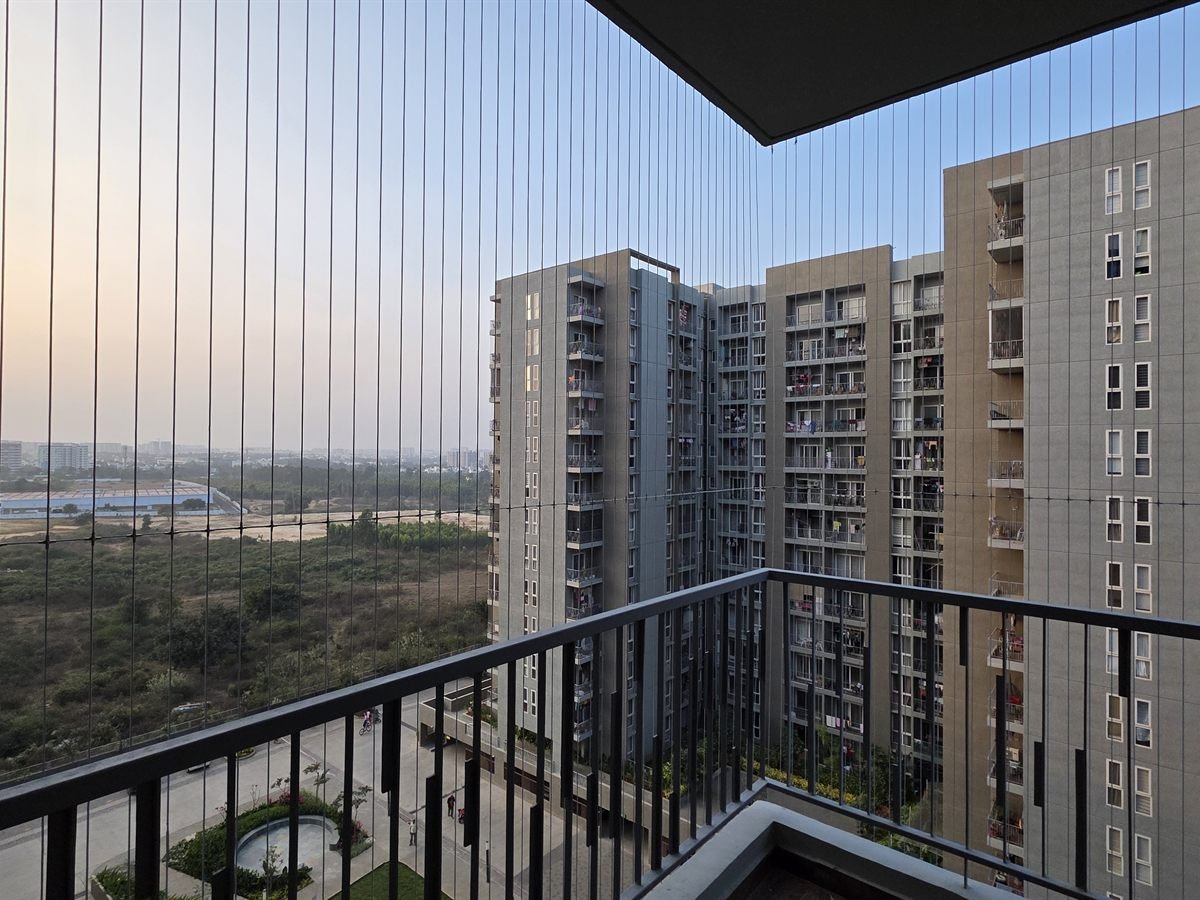
A completed invisible grill installation on an apartment balcony, photographed at dusk overlooking the skyline.
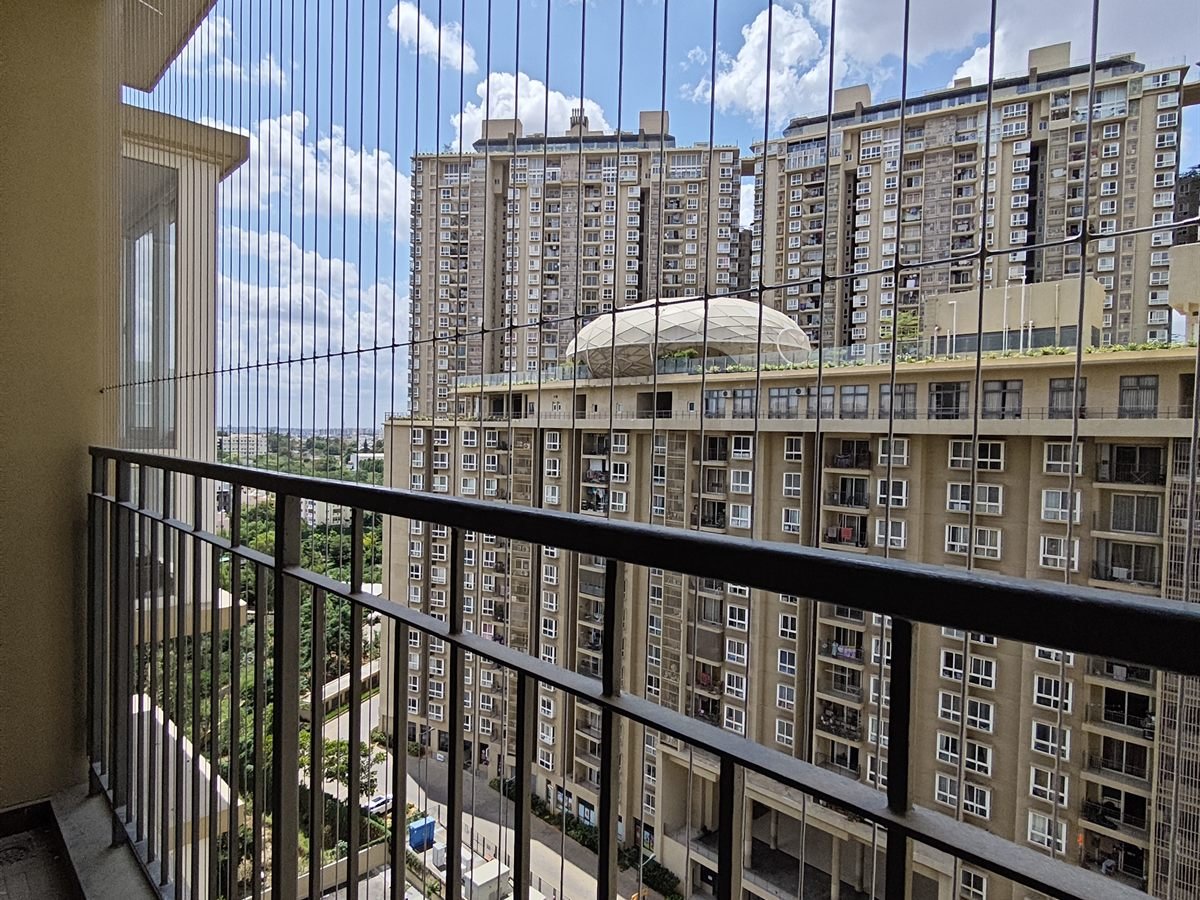
Invisible grill wires fitted to a balcony overlooking a tall apartment block.
We serve homes across Bangalore's established residential neighbourhoods and tech-corridor apartment belts — every quotation starts with an on-site visit rather than a fixed locality list.
We serve homes across Hyderabad's western IT corridor and established neighbourhoods — every quotation starts with an on-site visit rather than a fixed locality list.
Invisible grills use thin, high-tensile stainless steel wires or cables set in a vertical grid, held under tension within a slim frame.
No — that's the main reason people choose them over traditional MS grills. The wires are thin and closely spaced, so from a normal viewing distance they read as a light shadow line rather than a visible barrier.
They are designed and tensioned specifically to act as a fall-prevention barrier for balconies, windows and open ledges. Our team will assess your specific opening and recommend the right configuration during the site visit.
The wires are stainless steel, which is chosen specifically for its resistance to weather and corrosion. Long-term performance also depends on local air and coastal conditions, so we're happy to talk through care during your site visit.
Most balconies, windows and open staircases can be fitted, but the right approach depends on the opening size, frame material and mounting surface. A site visit lets us confirm feasibility before quoting.
Installation time depends on the number and size of openings — we'll give you a clear estimate during the site visit, before any work begins.
Tell us about your space and we'll arrange a site visit.
Prefer to talk? Use the Call or WhatsApp buttons on this page.